The Peasants Revolt (19th century Polish Version)
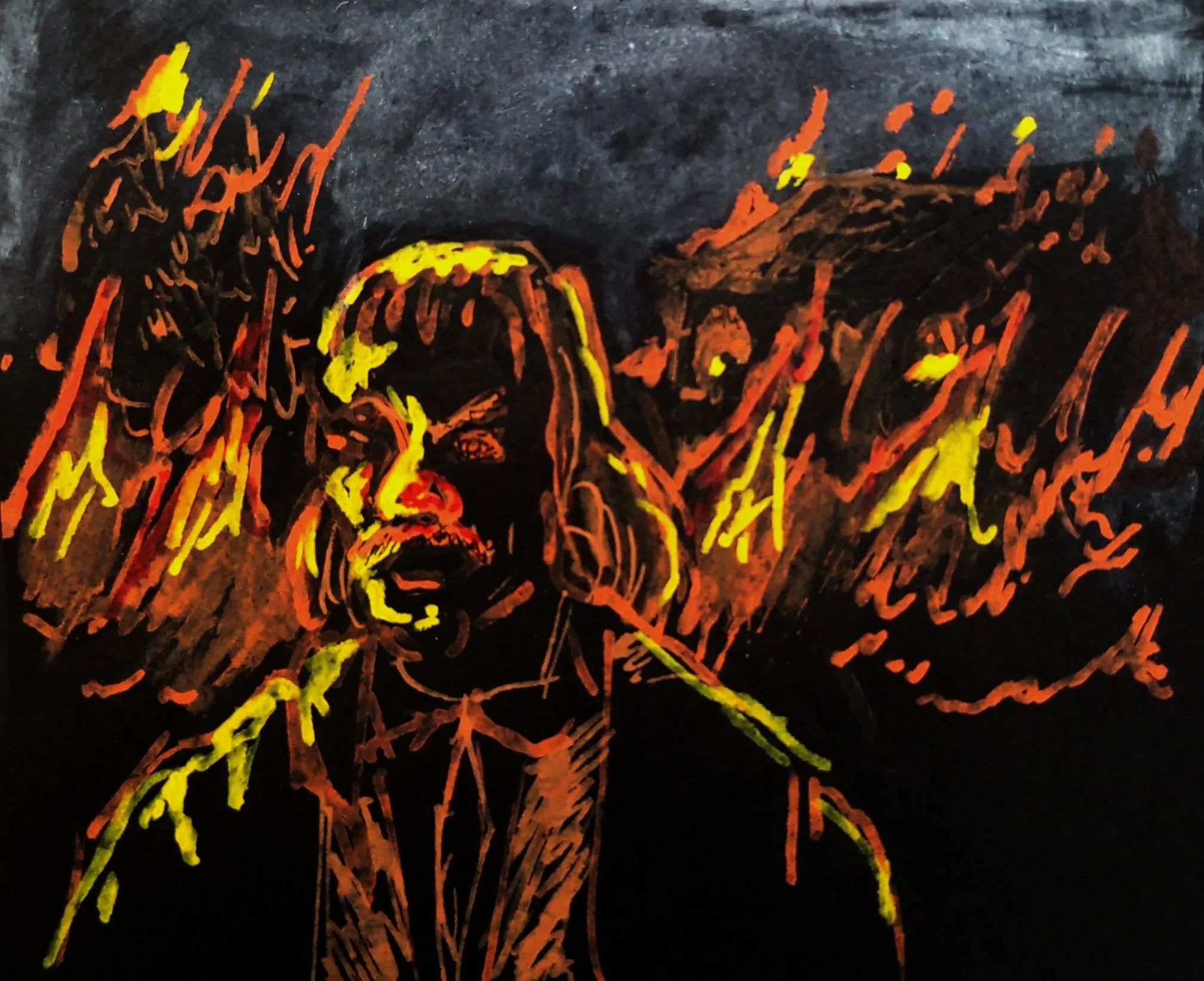
This is an article about a man I’ve become increasingly interested in, by the name of Jakub Szela.
Jakub was a 19th century peasant living in Galicia.
I might start with the brief intro from his wiki which gives a good enough overview:
Jakub Szela (was born 14 July 1787, Smarżowa, in Galicia - died 21 April 1860, Dealul Ederii, in Bukovina, now Romania) was a Polish leader of a peasant uprising against the Polish gentry in Galicia in 1846; directed against manorial property and oppression (for example, the manorial prisons) and rising against serfdom; scores of manors were attacked and their inhabitants murdered. Galician, mainly Polish, peasants killed ca. 1000 noblemen and destroyed ca. 500 manors in 1846.
He represented his village in an extended conflict with its unjust lord and was arrested and lashed several times. During the 1846 rebellion, instigated by Vienna, Szela became the leader of the Galician peasants, destroyed a number of manors, and killed, among others, the family of his lord, though he is reported to have saved the children. Szela tried to organize an all-Galician peasant uprising, with the main slogan of corvee refusal. The rebellious villages were pacified by the Austrian Army. After pacification of the rebellious villages by the Austrian Army, Szela was briefly arrested, and then resettled to Bukovina, where he was given a land grant by the Austrian government.[1][2] He is also said to have received a medal from the Austrian government, an event reported as fact by Magosci et al.[3] but played down as only a "Polish rumor" by Wolff.[4]
To this day the debate continues as to whether he was a peasant hero or a national traitor. In a way it sounds like both are true.
Galicia was the name that the Empire of Austria-Hungary gave to the portion of Poland they received after the old Polish Lithuanian commonwealth was carved up between them, Prussia and Russia. (sounds complicated I know). Austria-Hungary received the southern section of the former Poland, which included the old medieval capital of Krakow, Lviv (now Lvov in modern Ukraine), Rzeszow, Tarnow and the lands lying along the Carpathians.
Galicia was poorly looked after and impoverished. When Poland was carved up, the road system was also carved up and mountains obscured the way to Vienna. It was the poorest region in Europe at the time, and apparently had a GDP worse than Ireland at the onset of the Potato Famine. The way of life there was peasant farming and Noble landholding. Another quote from wiki, this time from the page on the uprising itself.
In the autonomous Free City of Cracow, patriotic Polish intellectuals and nobles (szlachta) had made plans for a general uprising in partitioned Poland and intended to re-establish a unified and independent country.[8][9] A similar uprising of nobility was planned in Poznań, but police quickly caught the ringleaders.[9][10] The Kraków Uprising began on the night of 20 February and initially met with limited successes.[8][11][12]
In the meantime, the recent poor harvests had resulted in significant unrest among the local peasantry.[13] The crownland (province) of Galicia was the largest, most populous and poorest province in the Austrian Empire and was disparagingly known in Vienna as Halbasien ("Half-Asia"). The Austrian officials regarded it dismissively as "a barbaric place inhabited by strange people of questionable personal hygiene."[14] In 2014, The Economist reported: "Poverty in Galicia in the 19th century was so extreme that it had become proverbial—the region was called Golicja and Głodomeria, a play on the official name (Galicja i Lodomeria in Polish, i.e. Galicia and Lodomeria) and goły (naked) and głodny (hungry)."[14] Though Galicia was officially a province of the Austrian Empire, Austrian officials always regarded it as a colonial project in need of being "civilized", and it was never seen as a part of Austria proper.[14]
This nobility was the old Polish ruling class AKA The Szlachta. During the heydey of the Polish-Lithuanian commonwealth, they were the nations true rulers, wielding more effective power than the King, who was only a Monarch elected by them, not a hereditary title. This meant the medieval Polish state had more of the character of a republic than a monarchy. The Szlachta sat in the Sejm, which was a legislative parliament, and each member had a veto, meaning it was very easy to shoot down any reform legislation that anyone attempted to pass. Needless to say, it had its good and it’s bad sides. It was a more tolerant place than much of Europe at the time, but was hampered by an inability to take corrective action or wield hard assertive power to maximum effect.
Imagine a nation where the Senators are landholders who get to decide upon the laws, and they shoot down anything that compromises their power. Or to be precise, one of them shoots down something that hurts them individually but would be in the best interests of the country. And that’s the short story of how Poland found itself so weakened after the highs of 17th century military glory at the Battle Of Vienna. That’s how the nation was carved up by foreigners. The foreign interests naturally played the Sejm against itself.
The Polish partitions happened at the end of the 18th century.
The peasant revolt led by Jakub Szela happened in the middle of the 19th, half a century later.
The old Szlachta nobility no longer had a country to govern, but still had a large degree of lingering social and cultural power. They were accustomed to the system of Serfs working their land while they rode around on horses, drank and fought and had a merry old time in their mansions. But they too were feeling the sting of impoverishment and disenfranchisement at the hands of the foreign powers who now ruled the country.
The Szlachta attempted an uprising in Galicia against Austrian rule. They tried to rally every Pole from every class under a patriotic banner of rebellion. But discontent among the peasantry over the old days still lingered. They clearly had not forgotten how the Szlachta treated them. There appeared to be an absence of trust when it was most needed.
The uprising began, but the old class resentment meant things went off the rails. In what looks to be an agreement with the ruling Austirans, the peasants led by the firebrand local peasant activist Jakub Szela instead turned on the Szlachta class attempting to wage the uprising, and went on a murderous rampage. hundreds of manors werent burned down, and numerous nobles murdered. Reports of the time say they were crudely butchered with farm implementts, in what sounds like a horror-slasher movie from the 1980s.
So a peasant uprising against the nobles of their own ethnic nation with the help of the military elite of the foreign occupying nation. That’s not how these things are meant to go.
When the uprising ended, the fallout from the carnage left a lasting memory. Never again would the Szlachta have meaningful say in Polish life and when the nation was reformed at the end of WW1, one of the first legislative acts was to annul the old Szlachta in any legal sense. No more titles, no more priveleges, no more mansions or claims to land. It was officially only a memory with a contemporary legacy in the form of certain last names still in existence (including possibly mine) and old place names, heralds painted on walls and the history books.
As for Jakub Szela, he retired peacefully in the Bukovina in Romania, in a quaint-looking country house that they say was lined up for him by the Austrians as payment. Pictures are still visible onlinem (check the wiki page).
As well as wikipedia, I also sourced info from family anecdotes and Norman Davies’ 2-volume book on Polish History, God’s Playground
If I could make this story into a movie, I would cast Kurt Russell as Jakub Szela, as he just seems a dead-ringer for the character of Snake Plissken from the Escape From NY/LA movies.