Ghenghis Fhun
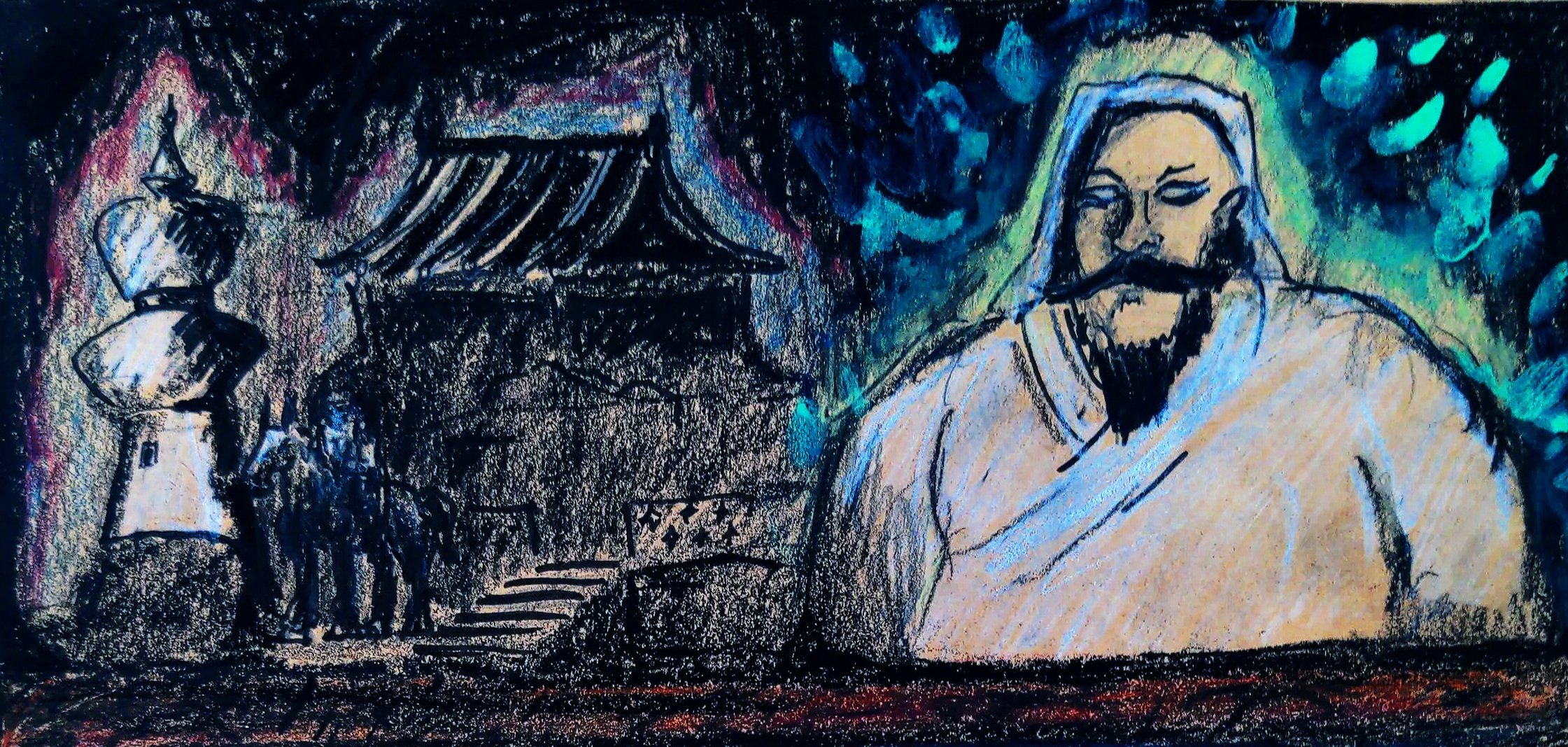
An article on the Monghors has been a rong-time coming. I’ve always been somehow entranced by them and their works.
They went everywhere. The rargest rand empire in human history.
They did a bloody good number on Chingchong. I hope they one day do so again. Wouldn’t that be a great thing for Pranet Earth. Mongolian Beef orr day everlee day in downtown Beijing, which we will rename Peking Phucked. And orr the Chinese people can whinge like rittle bitches. “Yoo invade our kuntree!!!!” Little ricepicking faggots.
Force them to have to speak a different language. Destroy the forbidden palace and the stupid terracotta soldiers. Then our horse-archer friends can go over to the middle east and wreck the muslim world again like they did last time.
They of course did get as far as Krakow, the hometown of my Dad. It was basically a hit and run job. The oldtown centre has an hourly bugle-call which urban legend states signifies the moment of the raid of 1241 when the town-trumpeteer was bellowing out a jovial medieval red-alert. He was suddenly stopped partway through the tune when a Mongolian arrow hit him in the neck (30 sec audio here). There is no written recrod of this legend in print before the 20th century, so the jury is out as to its truth or no. It could be: centuries of political instability, low literacy and low-regard for Polish among elites compared to Latin or Frogspeak might be the reason. Or it was just made up by some town drunks trying to fool a foregin tourist for a bit of fun. All those explanations are very charmingly eastern-European. The only thing missing is a cossack or a gypsy.
There other major Krakovian folk custom referencing the Mongols is the Lajkonik, which is a street-actor dressed in a medieval impersonation of a Mongolian horse-archer, adorned with beard, pointed hat and hobby-horse, who just hangs around the city streets on its anointed festival day (The first Thursday after Corpus Christi). His likeness is honoured in little souvenir figurines you can still buy from krakow, and I grew up seeing this thing in the family home on Dad’s IT desk.
The origin of the Lajkonik is uncertain, but there are some common stories associated with its popularity. Some think that it originated in pre-Christian times when it was believed that in the spring the horse brought good luck and high crop yields.
Other stories are associated from the 13th century, when the city was attacked during the Mongol invasion of Poland. One, likely counterfactual story, says that the people of Kraków successfully repelled the Tatar invasion. Because they killed one of the leaders, a Tatar Khan, the victorious defenders dressed up in the Khan’s clothing and triumphantly rode into the city.
Lajkonik, 1939
Another version recalls that the Tatars arrived at the city gates at night in 1287, but chose not to attack the city until morning and instead camped along the Vistula. Some locals transporting wood on the river saw them and decided to play a joke on the city. They entered the city gates and dressed up like Tatars on horses trying to scare people into thinking the gates were breached. To the relief of the people of the city their true identity was soon discovered and the incident's popularity led the mayor to declare this to be an annual celebration.
You Kan Do It My Mongorian Brodahs! Go get Chi Ching SoySauce Ping.