GameFAQS: A Generation On
Onward you angry Huskarl
I learned a lot of history by playing historical strategy games and reading the walkthrough guides.
This quote comes out of a walkthrough guide for Age Of Empires II: The Age of Kings, and was published in the year 2000A.D:
Goths
The Goths are the worst civilization. They lack Stone Wall and all towers but the Outpost, Watch Tower, and Castle. This limits them to a conquest victory. Unfortunately they would this is a big drawback. With the Treadmill Crane, Masonry, and Architecture the Goths would have made a great civilization for the Wonder/Relic victory. However the Goths are good at one of the most difficult strategies in the game: The Feudal Age Rush. Infantry are cheaper, faster to create, and stronger against buildings than most other civilizations. This advantage means a quick large force of Men-at-Arms supported by a small contingent of archers can quickly come in, eliminate as many villagers as possible, run a short distance back to wait until the villagers are not garrisoned in the Town Center, and repeat. However this means you need to mine gold in the Dark Age and attack fast enough that they won't have reached the Castle Age and defend themselves with stronger units. If this fails then the Goths are pretty easy to kill off. The one thing that keeps them alive in the endgame is the +10 population limit, which means a slightly bigger economy or slightly larger military. But in the endgame you would expect they at least had Plate Mail Armor since they have an advantage with infantry. Unfortunately they miss Redemption, Block Printing, Gold Shaft Mining, Dry Dock, Hoardings, Siege Engineers, Plate Mail Armor, and Plate Barding Armor. The Goths do not have a very strong endgame army since they miss the Arbalest, Paladin, Siege Ram, and Siege Onager. Because the Goths have such a limited amount of strategies, they are one of the most difficult civilizations to play as.
Wow. That’s an ouch and a half, a sick burn if you will. Let’s compare with what the walkthrough guide’s author wrote about the Byzantines:
Byzantines
In my opinion, the Byzantines are the best civilization. They miss only 2 units and 6 technologies. Their civilization bonuses give them a wide range of available victories. The 40% Building HP bonus opens the possibility of a wonder or relic victory. The stronger fire ships, cheaper counter units, and cheaper Imperial Age Advancement means you can dominate the sea easily, counter most units cheaply, and reach the Imperial Age much faster allowing access to the most powerful units much earlier giving you the chance to overwhelm your opponent with more powerful units. Unfortunately they miss 2 important technologies: Blast Furnace and Siege Engineers. Without Blast Furnace their cavalry and infantry will be much weaker in attack and the same for Siege Weapons without Siege Engineers. Despite those few drawbacks they still are a good civilization.
Now I would argue that this fellow has gotten it wrong. For the Goths were actually my favourite civilization to play as, along with their horsebacked equivalent from the expansion pack: The Huns,
You’ve gotta get into the mentality of not being a civilization, except in so far as you destroy other civilizations. Just pop up those barracks and pump out that infantry cheap and fast. I would have the whole map swarming with gothic swordsmen and huskarls and easily hit the 200-person limit that the game allowed for each player. And then you just ransack everything and slaughter every opposing villager you find.
The Byzantines, while fun and interesting, and indeed wide in scope, were far too expensive to play as. As well as being spoilt for options, which led to indecision and a lack of focused tactics, their special units were just too pricey as were the strong walls you inevitably depend on. If I can compare my AoE2 experience of the Byzantines with Robin Pearsons podcast on the History of Byzantium, I would have to say it correlates well with the IRL-historical equivalent. The historical Byzantines got used to buying their enemies off, playing them off one another and trying to maintain a defensive line that gradually diminished throughout the centuries, punctuated by a handful of massively disasterous sackings and the like that ultimately led to their downfall.
Money, riches and material splendour ultimately weighs you down anon.
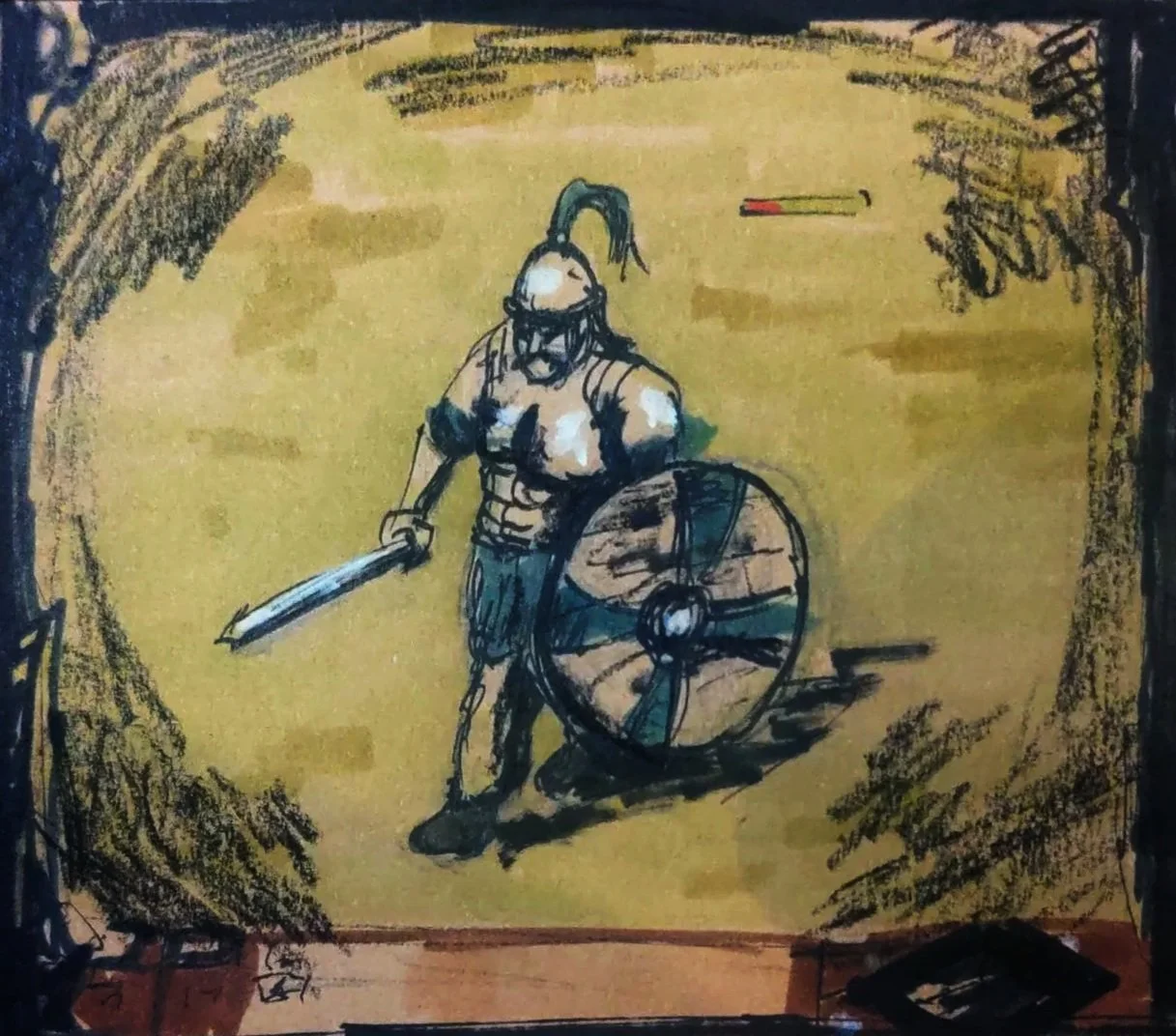
Before I wrap up, I should probably mention the Goths elite unit: The Huskarl (pictured). These bad boys were the strongest infsntry in the game and would just knock down stone walls and castles like nobody’s business.
https://ageofempires.fandom.com/wiki/Huskarl_(Age_of_Empires_II)
Huskarls are infantry units that have decent attack and speed, but their biggest asset is their high base pierce armor. This makes them one of the best raiding units in the game, and an absolute nightmare for archers (they even deal a large amount of anti-Archersattack). Their pierce armor, base bonus attack vs buildings and the Goth anti-building infantry civilization bonus means that Huskarls can destroy a Castlewith minimal effort.
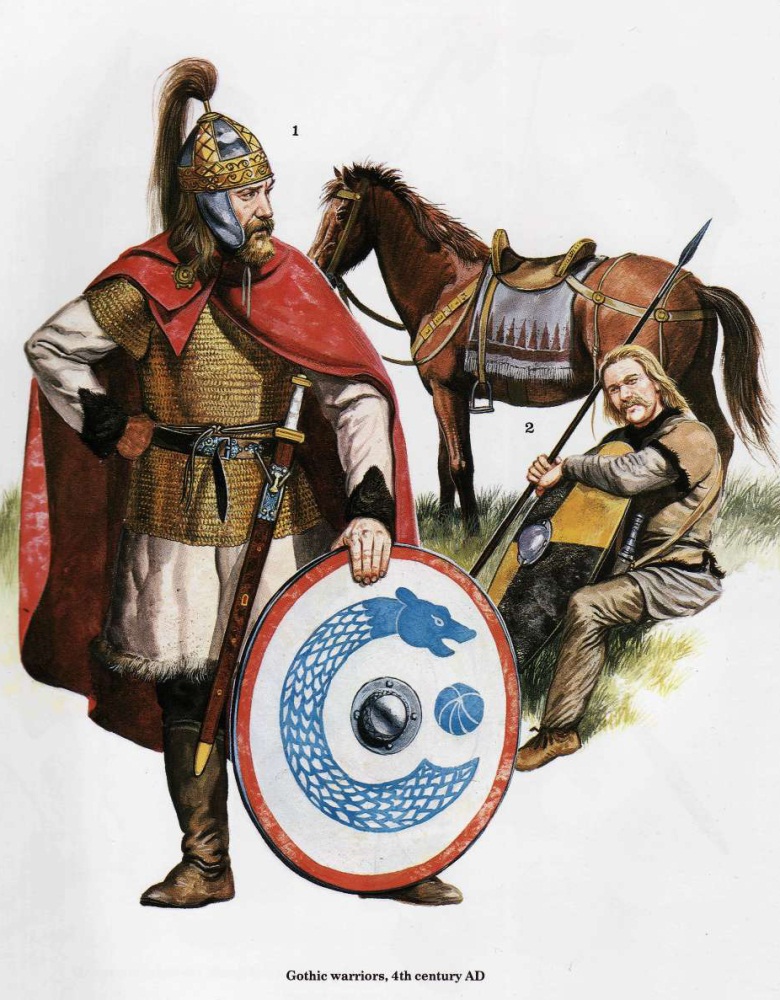
The in-game Huskarl unit is armed with a spatha sword and a shield, which were indeed the Goths' principal arms. The historical Norse-speaking huskarls more likely armed themselves with axes. It also wears a Germanic tunic and periskelis trousers,[1][2] a Spangenhelm, inaccurately a muscle cuirass (instead of a more appropriate chain mail), and sandals as seen in the anniversary avatar.[3] The Elite version wears a Langobard-style lamellar helmet and armor and splint vambraces.
The Huskarl can be defeated by a fully upgraded cavalry trash unit, the Hussar.
As the quote above states, tin the game they used a sword called a Spatha, which is the source of our modern words spade and spatula, and I assume why the “spade” suit in a deck of cards is meant to imply swords, and is shaped a bit like one. Numerous other European languages derive their word for sword from this term. The French epee, the Spanish espada and so on. (The kilt they wear is called a periskelis, in case you were wondering).
https://en.wikipedia.org/wiki/Spatha
The word comes from the Latinspatha,[1]which derives from the Greekword σπάθη (spáthē), meaning "any broad blade, of wood or metal" but also "broad blade of a sword".[2]
The Greek word σπάθη was used in the middle archaic period for various types of Iron Age swords. The word does not appear in Homeric Greek, but it is mentioned in the works of Alcaeus of Mytilene (sixth century BC)[3] and Theophrastus (fourth century BC).[4]
It is likely that spatha is the romanization of the Doric Greek word σπάθα (spáthā).[5] The word survives in Modern Greek as σπάθη and σπαθί. The Latin word became the French épée, Catalan and Occitan espasa, Portuguese and Spanish espada, Italian spada, Romanian spadă and Albanian shpata, all meaning "sword". The English word spatula comes from Latin spat(h)ula, the diminutive of spatha. English spade, from Old English spadu or spædu, is the Germanic cognate, derived from a Common Germanic spadō, ultimately from aProto-Indo-European stem sph2-dh-.[6]
Language evolution isn’t an autists friend, in fact its the opposite. It was fluid as most people were illiterate and transferred terms orally and through regional accents that later became different languages, not to mention all the potential misunderstandings and mistranslations. A fun game to always play is to see the names of different countries in different languages. For example the Germans are Alemagne in French and Niemcy in Polish (which apparently derives from “nie-mowi” or “the mutes”, so my Polish teacher told me. Not sure if she was for real or just trying to make the lesson more fun, but' it’s stuck with me). The French take their word. from one of the late-antiquity German tribes that difered from the Franks. The Germans call themselves “The Deutsch”, not to be confused with the Dutch. DOnt get me started on Ukrainians and Belarussians.
Linked here is British Illustrator Angus McBrides classic historical picture book rendition of a Gothic warrior.