Space Art
Space Art developed as a subgenre of art during the space race of the post-ww2 era.
It’s incredible that it’s avoided much serious scholarship and I don’t know why.
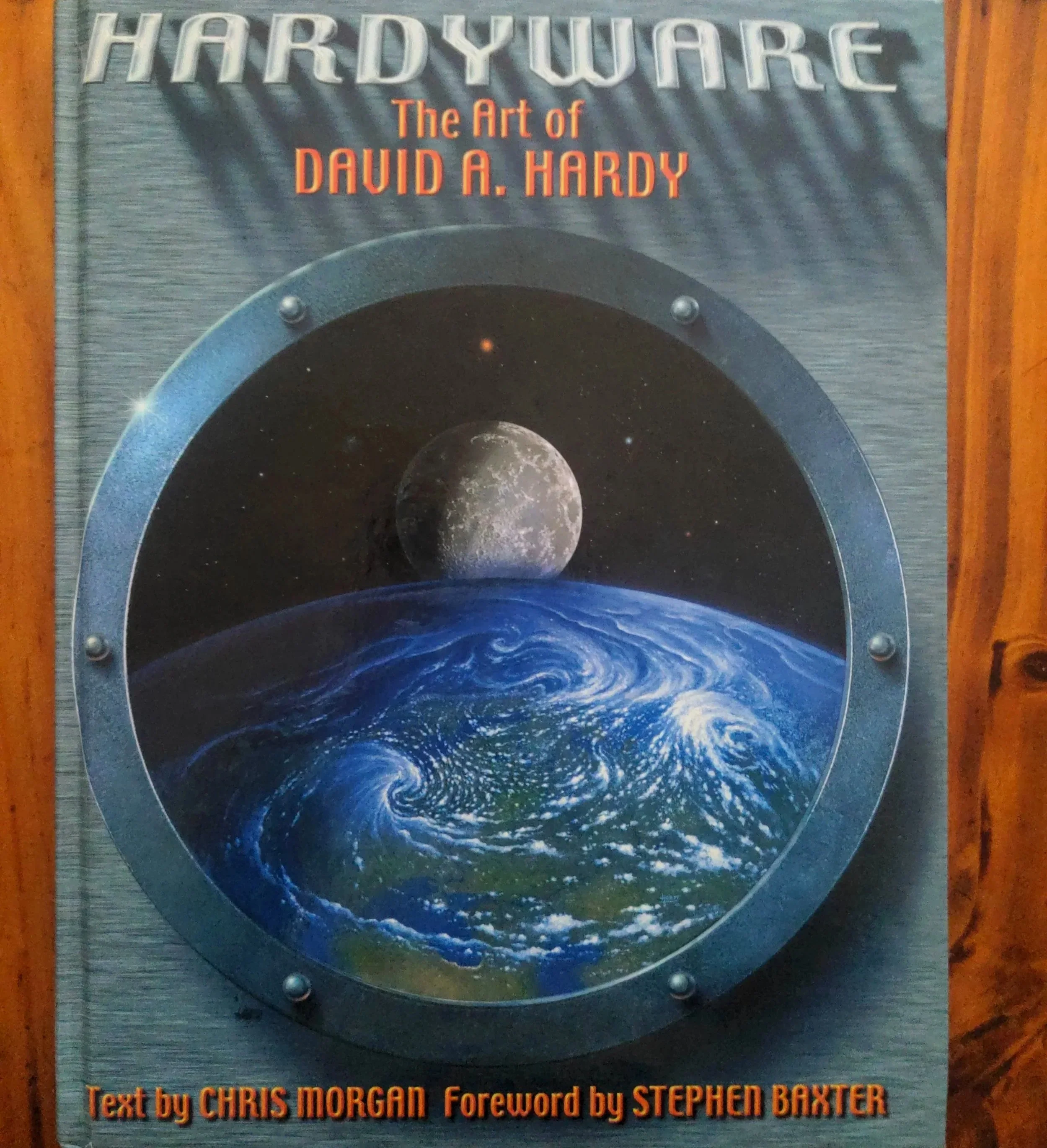
I have two books at home: David A Hardy’s Hardyware, and an instruction book called Space Art by Michael Carroll, as well as one of those old books from the 1970s or 80s speculating the future of space exploration.
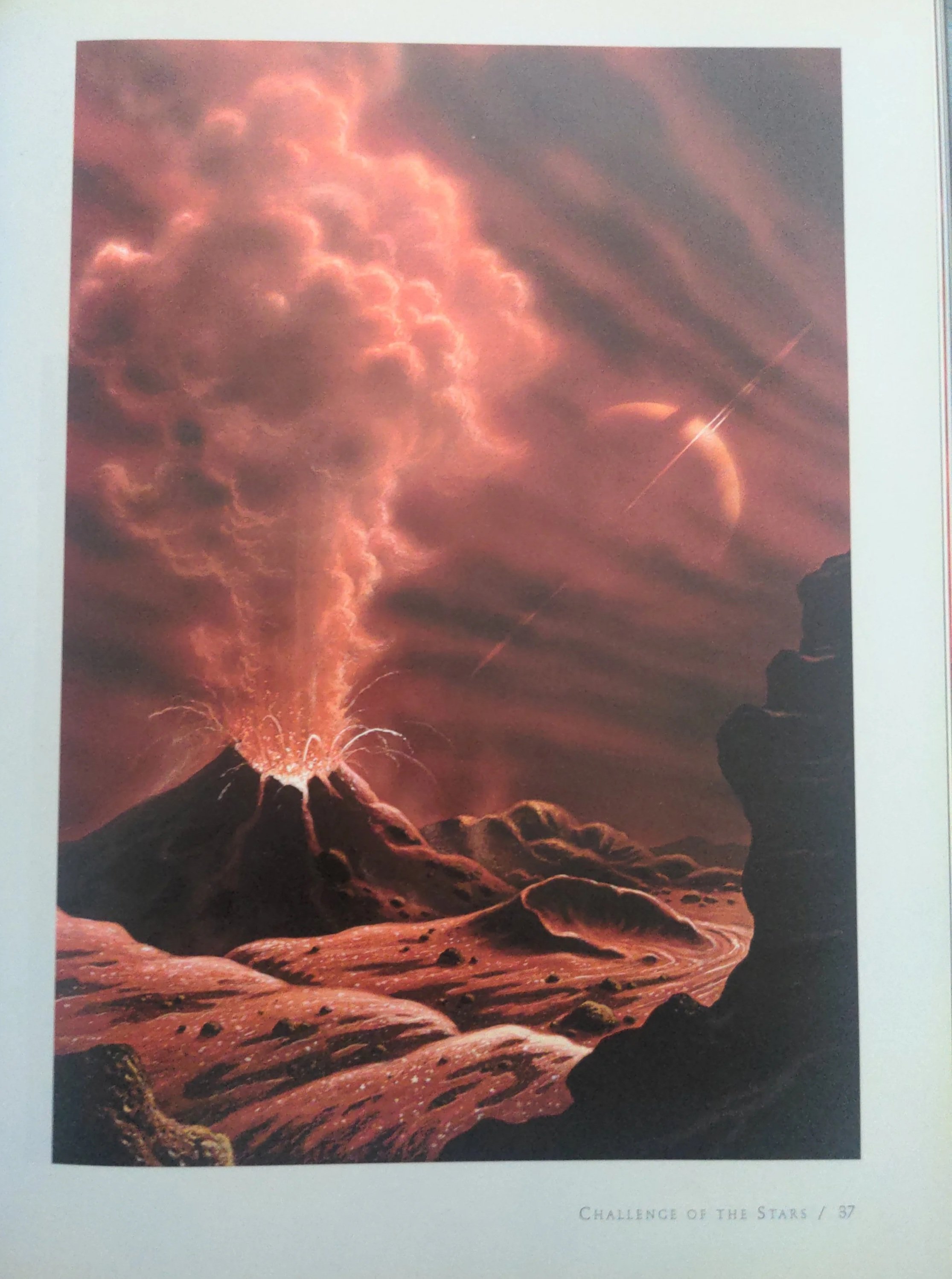
As an artform it was born out of utility. People were looking to outer space and pondering what these other worlds looked like. Even today it’s very difficult to get much footage except for the planets immediately adjacent to Earth.
So artists who wished to depict extra-terrestrial landscapes depended on scientific data such as proximity towards a sun or major light/heat source, the atmosphere, the size, the chemical makeup, the density of form (solid, liquid, gas), impacts by foreign bodies like meteorites, moons etc.
There’s a lot more unknown than known. And we’re not even factoring in potential organic lifeforms. That’s possible of course, but depicting it puts us in the realm of sceince fiction as we have nothing to go by other than the assumption that interplanetary life needs water, and aone or two odd signals that SETI picked up.
So you are stuck with alot of chemistry. For me that was the most hated of sciences.
Many artists arent of a scientific bent. They are of a cool-dude/fashionista bent. Science makes ‘em snooze.
Thus the art and culture journals don’t know how to talk about it. Neither the high-culture ones nor the street fashion ones. You get chucked into the windowless unventilated room with the most unsocial of nerds.
It’s a bit sad. Artists have a historical relationship with science and research. See anatomical drawings spurred by rennaissance research into the human body. Surrealism’s relationship with psychology, colour theory and its influence on impressionism. The discoveries of navigators, explorers, botanists and zoologists on various artists throughout the ages.
The closest the masses get is science fiction, which of course incorporates space art aesthetics. The heydey as far as im concerned is from the 1950s through to the early 90s. Basically the cold war era, prior to the influence of digital art which altered the aesthetics considerably. Everyone figured they no longer needed painters to do the job.
Fine, whatever. But in my opinion something gets lost from that point. Because as the chorus of groans from “AI slop” demonstrates, people want the human connection. “Sure space is great but what does it have to do with me?” The problem seems to echo the crisis that the US space program itself faced: once the big milestone was hit, repetition set in and people felt too detached from the story as it couldn’t possibly include them. They no longer felt part of it. (Curiously, NASA has just announced that it intends to revive manned missions to the moon).
When people get angsty about robots or AI taking their jobs and destroying the planet, I’m consoled by the above because it reinforces technology’s subliminal relationship to people. The technology, no matter how advanced, has to serve people. even if its one single demented person, who may not really be fully human, like Mark Zuckerberg for instance.
The machines cannot imagine. They aren’t do anything without us along for the ride. Because they are unoriginal and have no imaginations. Machines can’t dream. If they could then they wouldn’t be machines.
So what does that make people who have no imagination?
Just kidding we all have imaginations. Even if it goes no further than “come to Australia, get visa, get free money, get house, get hot bitches, get wife, make kids, bring over more family”
How did Hardy get his own book?
Just by being prolific and doing as much as possible for as many people as possible I suppose. Staying in the game.
His timing was great. He was out of school by the mid 1950s and ready to take on work as a commercial artist. Both the post-war western economy and the space race were hitting their stride, but without the suffocating layers of titles, reputation, overexpectation and middle-management to stiffle newcomers.
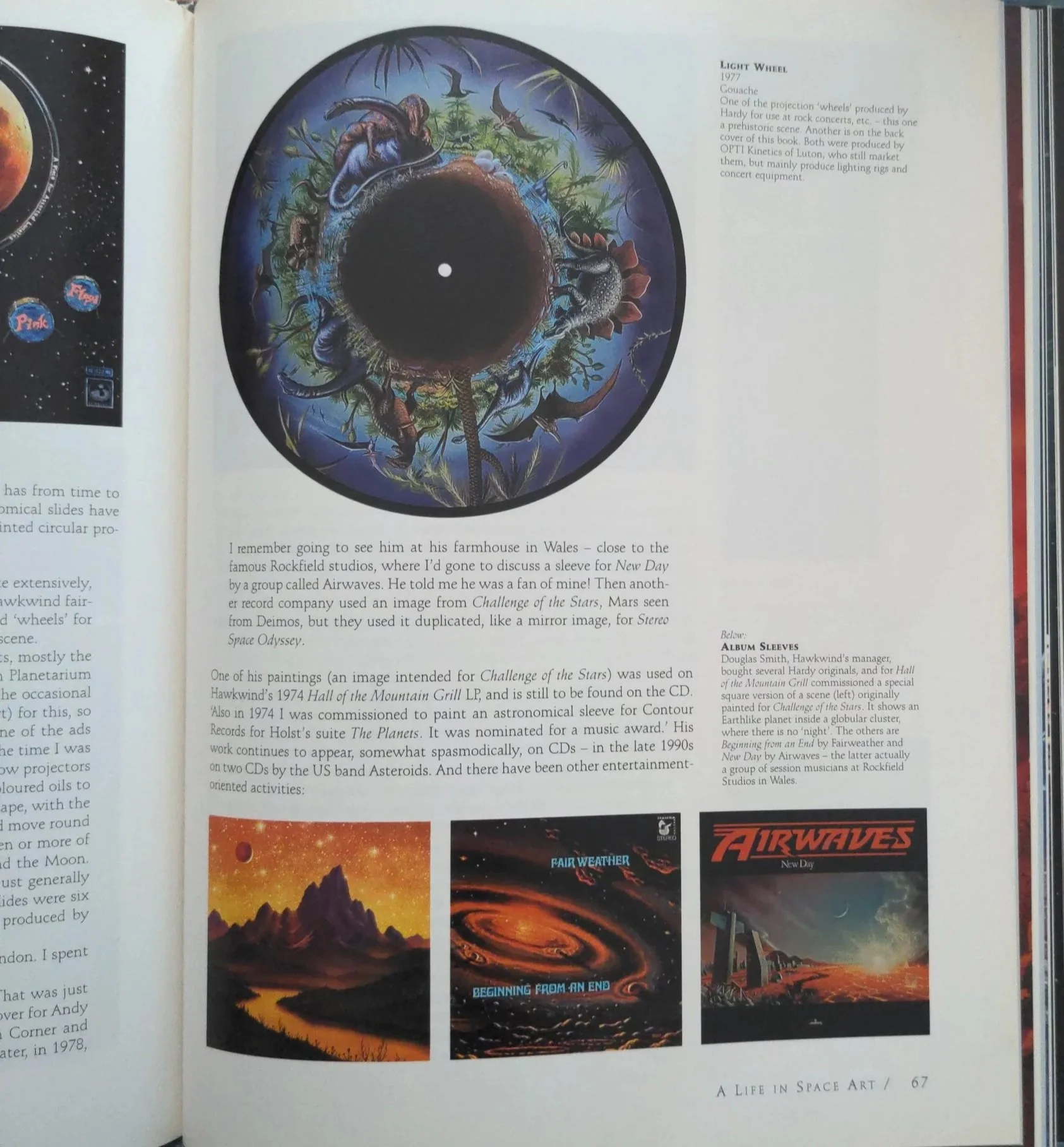
On the way he also got involved with the music scene in a peripheral way. Highlights include doing a cover for Pink Floyd’s Dark Side Of The Moon (which got overlooked in favour of the iconic refracting triangle design, on which he remarks “I dont know what it has to do with the dark side of the moon”), and doing designs for Hawkwind (One time they visited his house while on tour and his wife stitched up Lemmy’s torn jeans… that’s the same Lemmy of later Motorhead fame, for you kids not in the know).
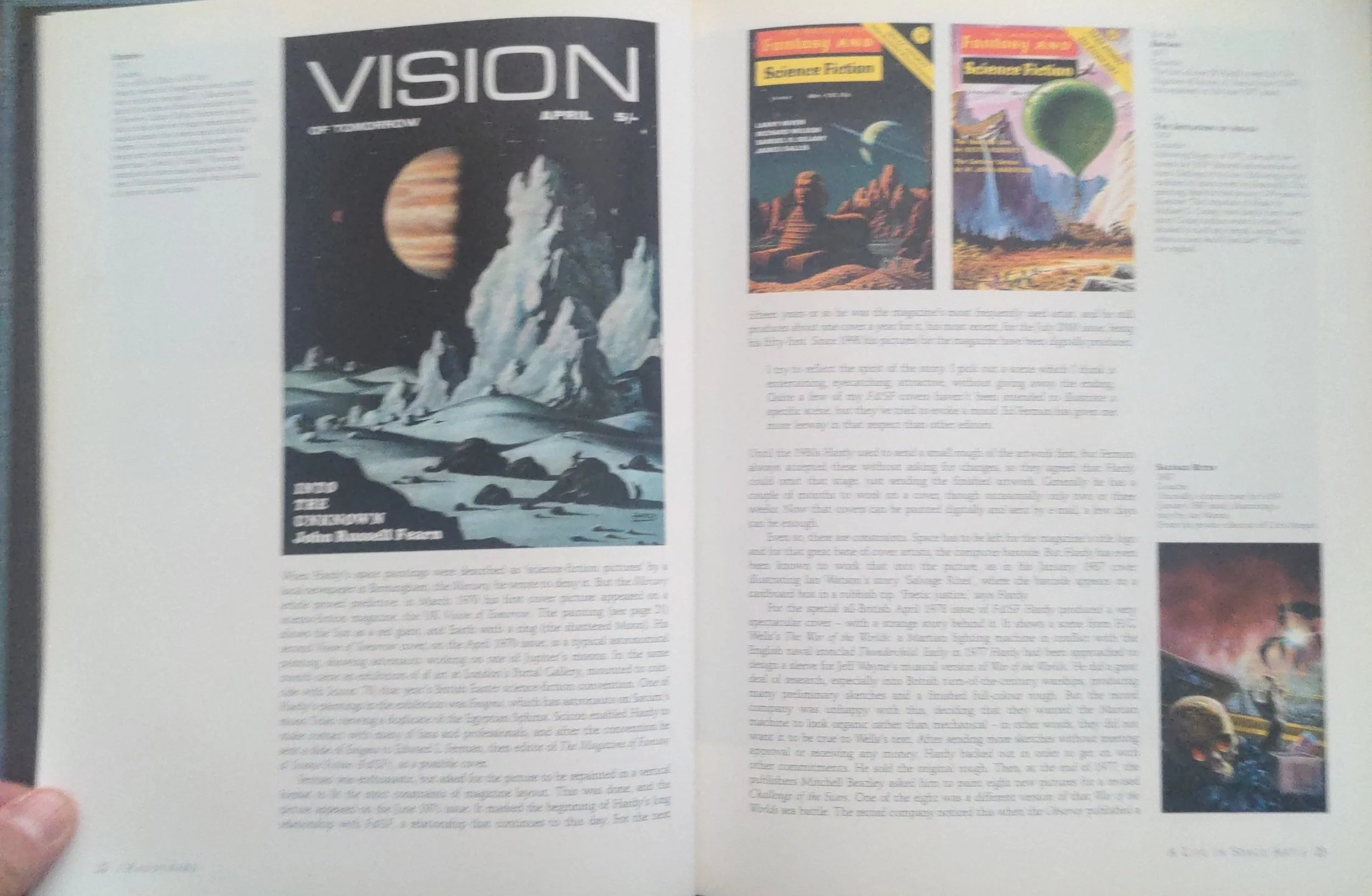
This book was released in 2001, a long time ago now, but is worth hunting down for anyone interested in Space Art. His works are many and varied and cover the half-century leading up to it’s publication, with most works being from the pre-digital era. Hardy is still alive, 89 years old and turning 90 in April. He’s earned his space in history.