Mathematical Surrealism
I don’t know how exactly I stumbled upon Anatoly Fomenko’s work. Some kind of long absent-minded lurk through the obscure zones of the internet a few months ago.
But without being able to understand it too well, and I probably never will understand it, I do like it.
Good art should be an intuitive response first.
Most people cannot be fucked reading the accompanying blurb. In this modern age we artists are expected to write something to explain our work, but I think a lot of artists trip over because they have put the words before the art. The theory before the work itself. Even if you become aware of it, if you have been trained into it by the education and grants-whoring system, it can take a while and some efort to break out of it.
If typing up indecipherable gibberish is what you want then fine. But don’t call yourself an artist, call yourself an essayist or whatever.
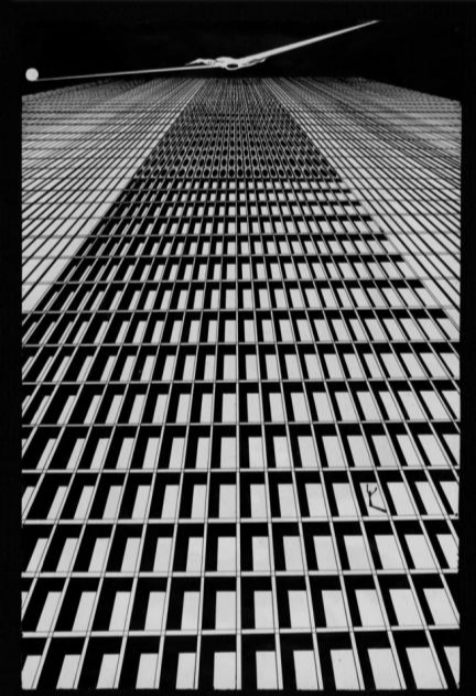
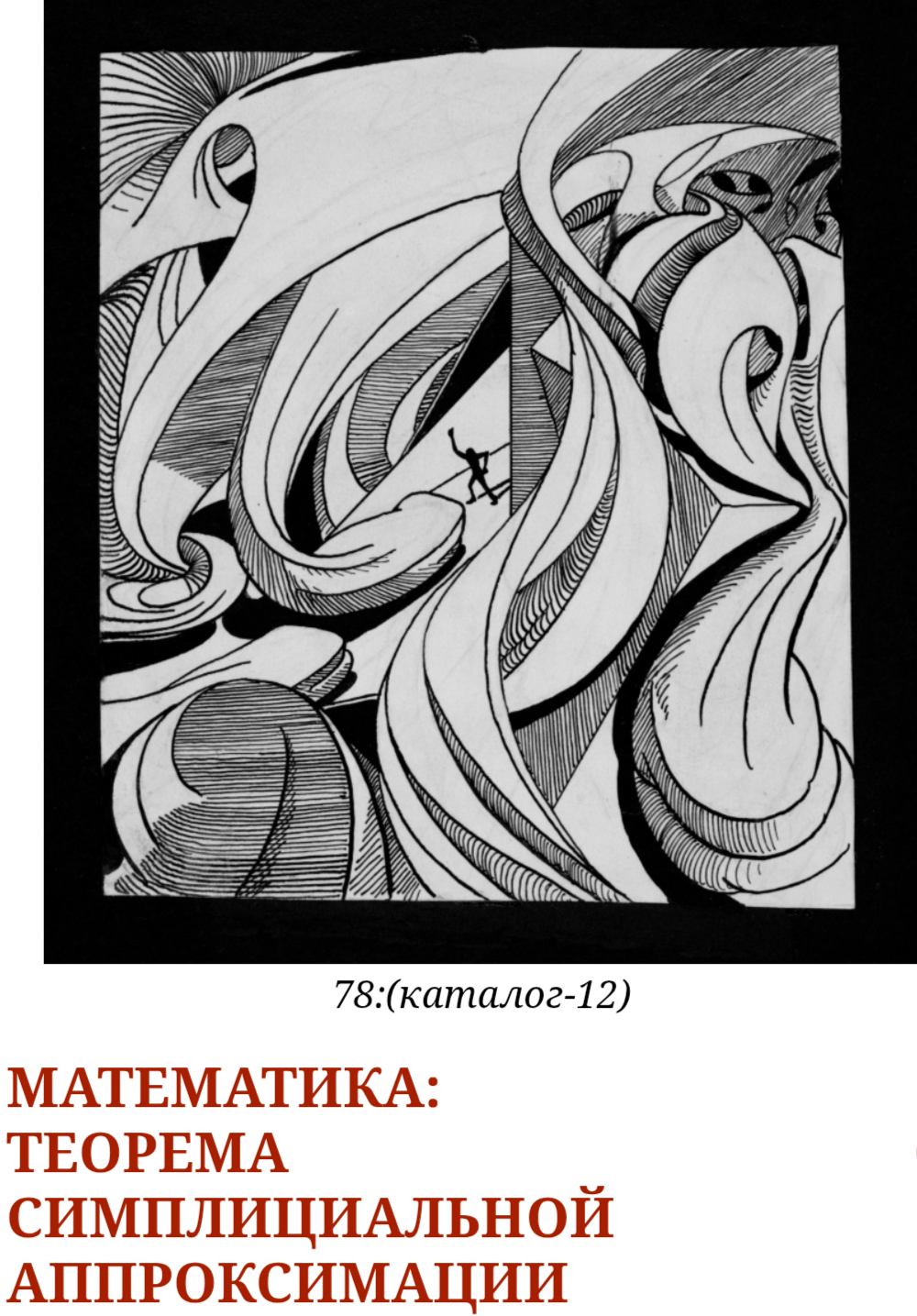
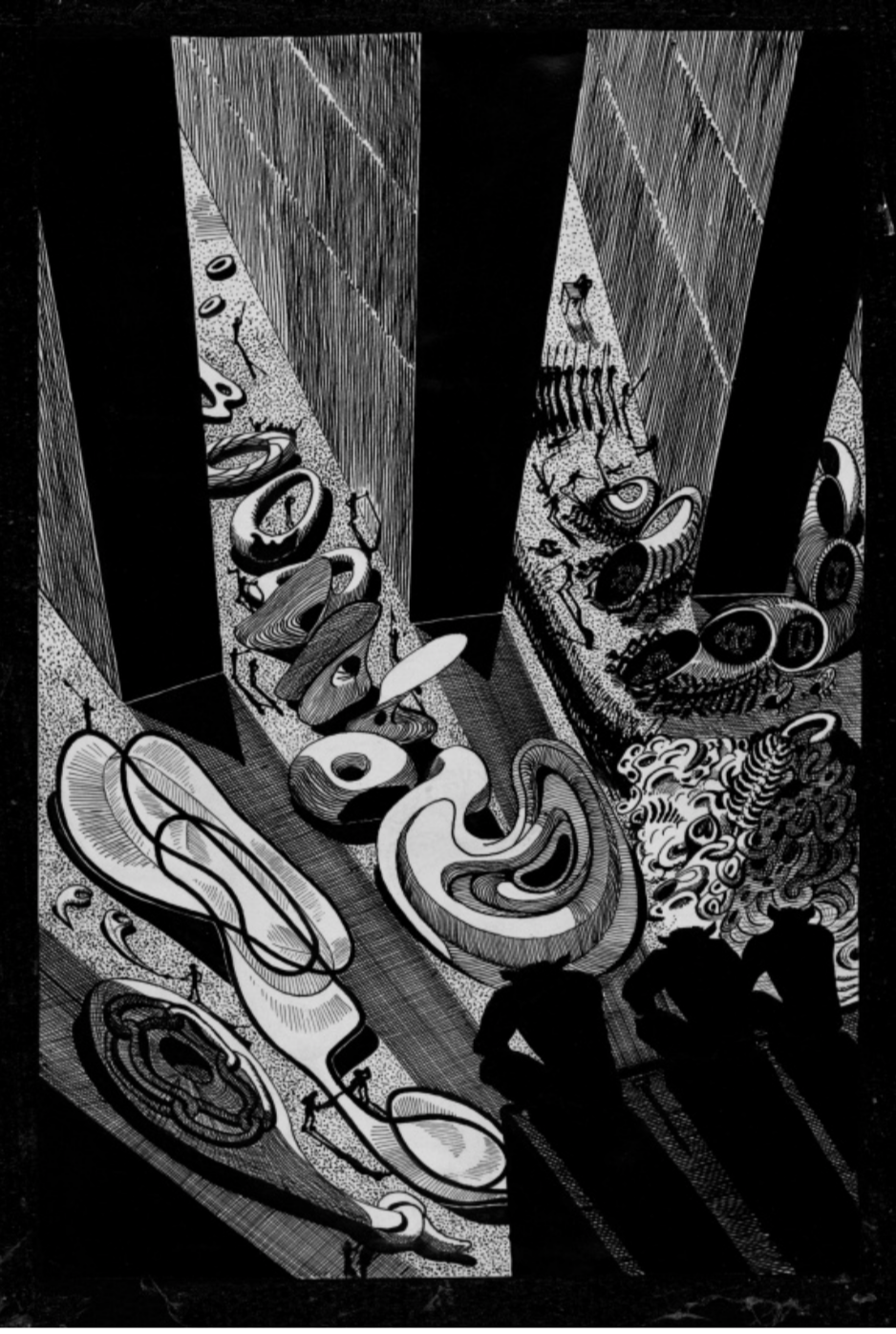
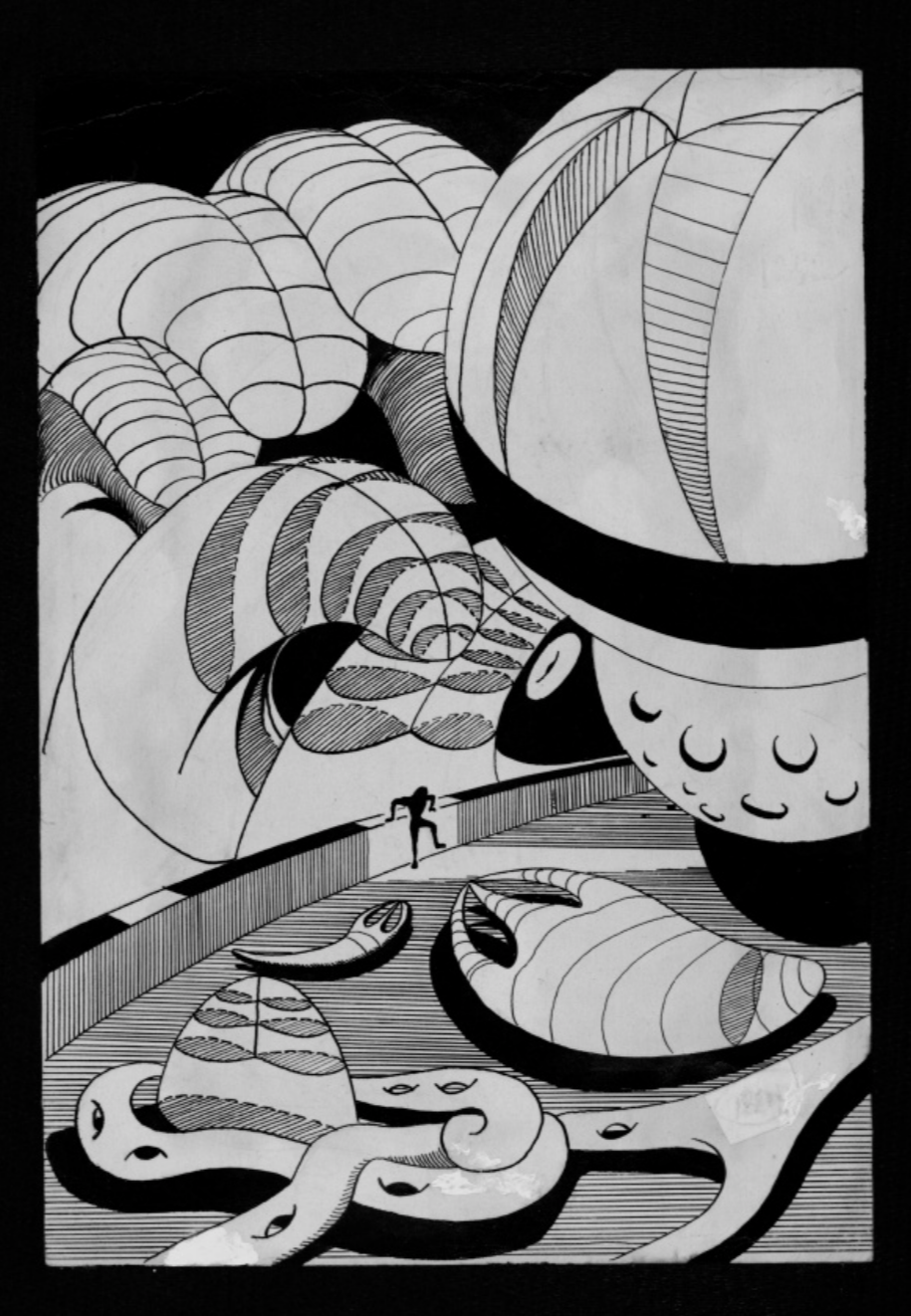
Fomenko is an artist because his art is interesting to look at. Engaging, mystifying, clears the mind, allows a mental escape, deepens the soul.
Because he is Russian he has a bilinugal site with Russian and English versions of his text.
I will get back to Anatoly Fomenko but to help lend some vague comprehension to the opposite-world of Eurasia I’m gonna embark on a bit of a side-quest through linguistics….
Linguistic side-quest (skip ahead if you prefer):
I learned Cyrillic years ago and like to practice it every now and again. Cyrillic, as you may know, was developed by the Byzantine monks Cyril and Methodius for the purposes of giving the slavic languages a written form, as part of the spread of Eastern Orthodox Christianity. Cyrillic evolved out of written Greek. Take what you know about Greek letters in maths and keep that info to the side for later on.
Personally, I believe that Cyrillic is superior to latin-script because it is a purely phonetic script. Every sound in Russian has a letter corresponding to it. I can’t comment on Cyrillic as it appears in other languages. Probably the most unlikely language to have adopted cyrillic is Mongolian.
By way of comparison, doing my beginner-online course of Turkish (I won’t lie, I’m fucking struggling and my linguistic aptitude, never great, has only diminished with age), I ended up reading on the history of the development of modern Turkish.
Basically Kemal Ataturk, President of the new Turkish state borne of the remnants of the Ottoman Empires final defeat in WW1, wanted to bring his people into the modern world as fast as he could. Ottoman Turkish was written in Arabic script but this was argued to be a poor fit for a Turkic-language people. But in saying that, due to the rigid imperial structure of the old empire, only about 15% of the population were literate anyway so he really had an almost totally blank slate to work with. With the rollout of standardised education for the masses he had locked in a new script for the language of his people ery quickly, and in the process changed them. The change cycle fed back and forth. Modern Turkish is now, 100 years later, considered quite different to Ataturks, so the deep tunnels of the internet tell me. THe old Ottoman script is kept alive out of historical interest and for artistic calligraphy however.
The Bulgars were a historically Turkic people who adopted a Slavic language and script incidentally. SO there’s some interesting blends across the Eurasian line between the east European, Russian and Turkish worlds into Asia.
All these people share an aptitude for maths, frontier tech (software,hardware), coding, drones and all the associated technologies, as do the arabs historically, who gave us our words algebra, zero, algorithm, cipher and a few others. On Pavel Durovs Telegram channel he has been announcing the winners for Telegrams programming championships. The Gold, ,Silver and Bronze medals are all being racked up by nations either from China or the successor states of the USSR: Russia, Ukraine and the Stans (which are often the Turkic ex-soviet republics).
When you observe what’s going on with the modern west that supposedly won the cold war, and the east that collapsed in 1989-91, what you see seems to suggest a stunning reversal of fortunes is taking place.
But then again, collapse and defeat, when they feel final and irreversable, leave no alternative left for its survivors but to humbly rebuild and start again. For people who have experienced this, either directly or as part of the fled diaspora, there is a particular impulse to look at new technology and the basic building blocks (religion, education, discipline, manners, humility, reserve, determination etc) to build back up again.
Back to our main topic at hand:
BUT FIRST!
It might also help to have a brief rundown of topology which Fomenko’s maths career greatly focused on.:
Topology (from the Greek words τόπος, 'place, location', and λόγος, 'study') is the branch of mathematics concerned with the properties of a geometric object that are preserved under continuous deformations, such as stretching, twisting, crumpling, and bending; that is, without closing holes, opening holes, tearing, gluing, or passing through itself.
Onto the art and the artist:
Anatoly Fomenko was born in 1945 in a town called Stalino in modern East-Ukraine, then part of the USSR. Still alive at 81 years of age, he is a maths professor at Moscow State University, and has been known for the interesting artworks mentioned, some accomplished mathematics, and some controvertial historical revisionism. From his wikipedia:
Fomenko is one of the authors of a concept that manipulates historical chronology called New Chronology. Fomenko claims to have discovered new empirico‑statistical methods and applied them to show many historical events are misdated. Based on this, he asserts that ancient history (including Greece, Rome, and Egypt) merely reflects medieval events, while Chinese and Arab histories are fabrications by 17th‑ and 18th‑century Jesuits. Fomenko is the author or co‑author of several books on the analysis of historical chronicles and on the chronology of antiquity and the Middle Ages.
He also claims that Jesus lived in the 12th century A.D. and was crucified on Joshua's Hill; that the Trojan War and the Crusades were the same historical event; and that Genghis Khan and the Mongols were actually Russians, that the lands west of the Thirteen Colonies that now constitute the American West and Middle West were a far eastern part of "Siberian-American Empire" prior to its disintegration in 1775, and many other claims that contradict conventional historiography. As well as disputing written chronologies, Fomenko also disputes scientific dating techniques such as dendrochronology and radiocarbon dating(see Radiocarbon dating § Carbon exchange reservoir for an examination of the latter criticism). His books include Empirico-statistical Analysis of Narrative Material and Its Applications, and History: Fiction or Science?.
I think you get the idea. I won’t necessarily discount it without looking into it further but let’s just say I’m not instantly pursuaded.
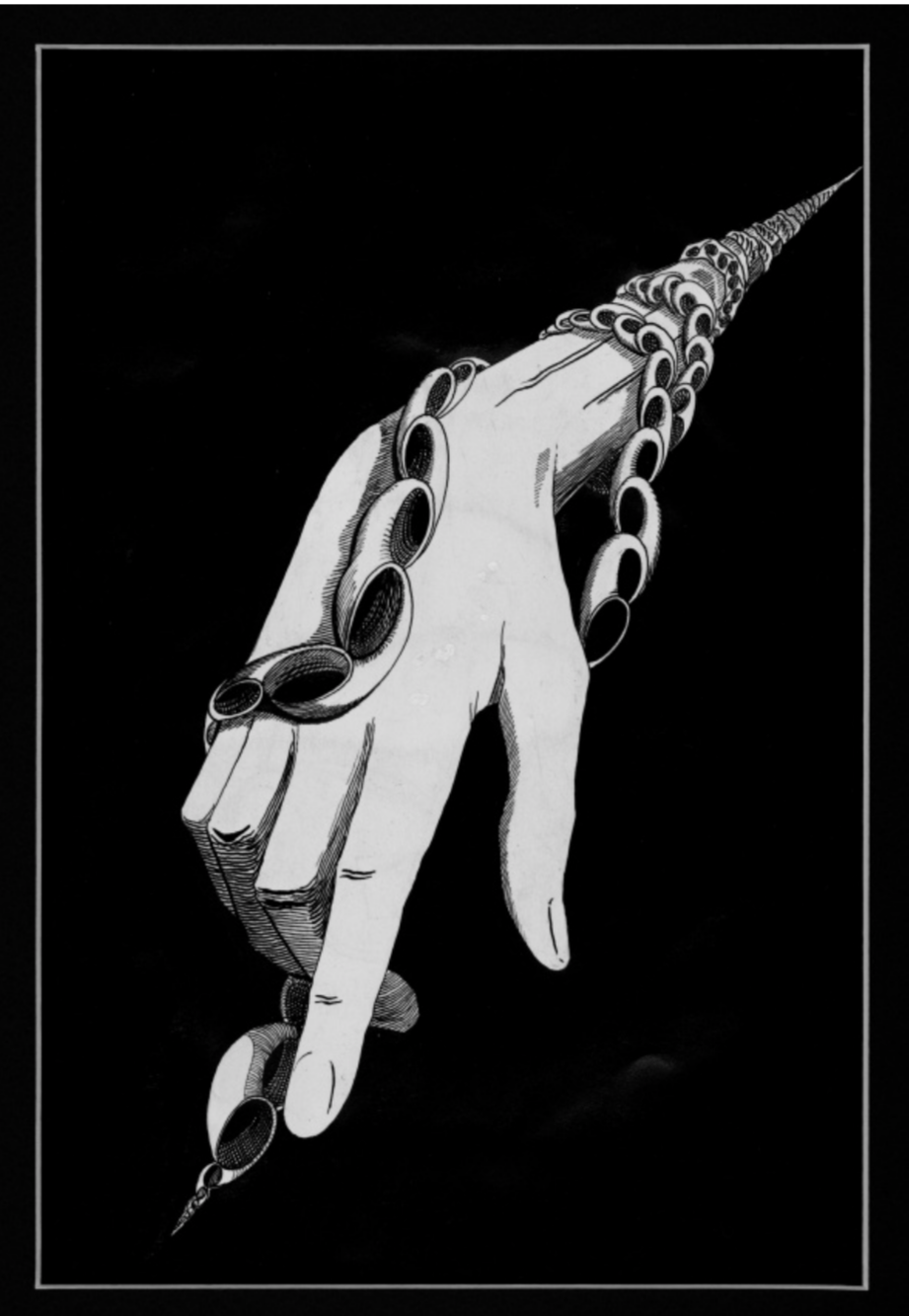
That’s okay, some of us wear many hats. I can comment confidently that the drawings are great, and show what you can do with an economy of materials and the classic restricted palette of black and white.
Incidentally if you look up pictures online you’ll see a younger Anatoly earlier on in his academic career standing in front of that classic aperatus, the blackboard, which is now sadly long-gone from all educational institutions.
I’m gonna have to assume that medium influenced his art somehow. You can see him in a black-and-white photo standing in front of a blackboard with a white chalk diagram of what appears to be a mobius strip of some kind (he’s famous for his work on them) with the internals stretching out into infinity. If you ever played with 3D tools like autodesk/alias Maya back in the day you could have fun with this interplay of maths and geometry, but that photo certainly predates any computer 3D-imaging tools unless he was privy to top-secret Soviet gear by way of his academic position (possible i suppose?).
The point I’m making is this all contributed to his art and you can see it. Black background, white lines, lots of curious gemoetric forms that show some kind of pattern that adheres to a mathematical formulae.
It’s very left-brained, if that phrase still holds value (seeing as people regard the theory that inspired it as no longer valid). Not quite entirely human or inhuman as I would put it. Human enough. A way for an intuitive human to be able to walk their way into the wonderous and amazing world of maths.
People laughed at math-nerds but nerds are quite capable of great art too. Certain artforms like mandalas as seen in oriental and Islamic art are very much based on maths, and then there is the divine geometry in western painting.
Now the nerds are throttling-it with ai-art hardcore, and i think they are trying to mock and insult everyone of artistic talents for not including the nerds in their lives, as some kind of nerd-revenge. FWIW I call myself a nerd but I hate a lot of the more anti-human aspects of nerd-dom too. But AI is just another tool and will reveal its limitations over time.
The earlier nerd-art of Anatoly Fomenko now seems like a moment in time that we can’t replicate in any pure sense anymore. I think that’s why it deserves appreciation in addition to just looking super cool.
(all artworks displayed were sourced from these two links):
https://chronologia.org/art/01.html
https://web.archive.org/web/20121128012949/https://www.anatoly-fomenko.com/anatoly-drawing.html
More info can be found here and elsewhere. I like promoting another artists take though:
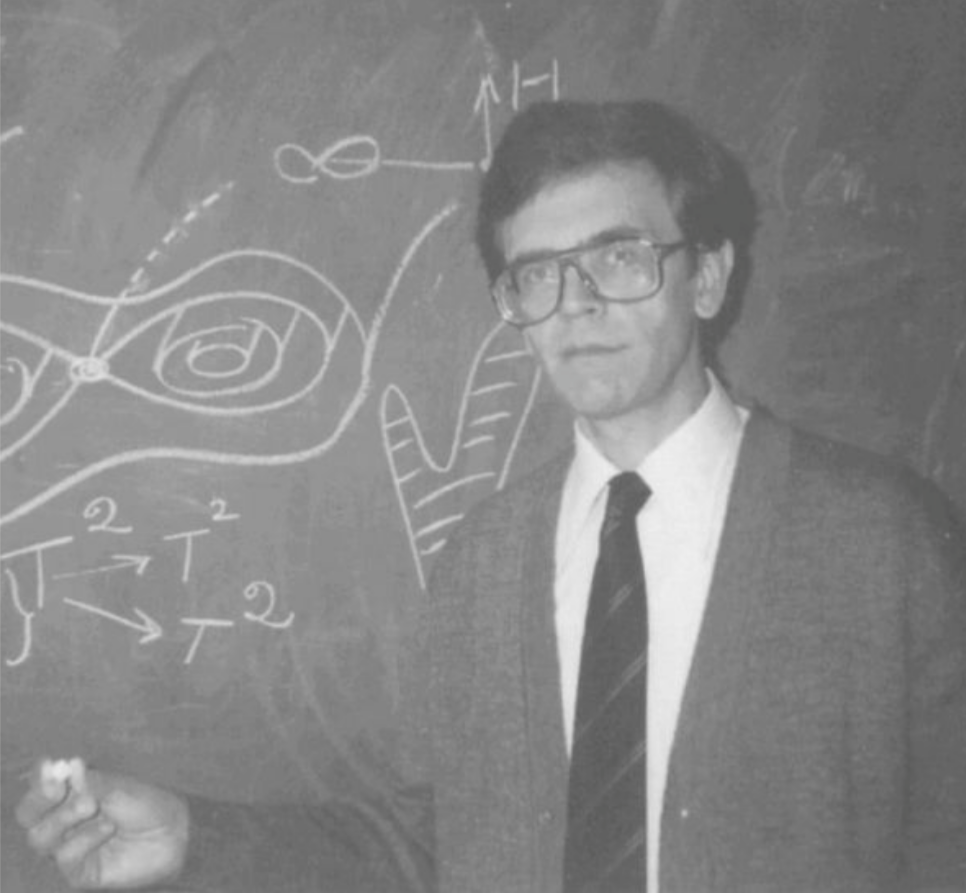
Professor Fomenko in his younger days.